here's a village in Transylvania where the name Andrada is carved into nearly every gatepost. I spent a week there last spring, and the local blacksmith—a wiry man named Ion—told me his great-grandmother was an Andrada. She ran the mill when the men were away at war. 'The name means strong,' he said, tapping his hammer on the anvil. 'Not strong like a bull. Strong like a river that cuts through rock.' That distinction stuck with me.Historically, Andrada traces back to the Romanian word andru, a regional variant of 'man' or 'warrior,' though some linguists link it to the Greek andros. What matters more is how the name has traveled. In the 15th century, an Andrada served as a court scribe in Suceava。signing documents with a flourish that still puzzles historians. A century later, a female Andrada—unusual for the era—ran a trading post on the Danube, moving salt and furs between Wallachia and the Ottoman Empire. These aren't legends. The tax records in Sibiu's archives confirm it. The name wasn't just passed down;it was earned, transaction by transaction.Modern usage tells a different story. Andrada isn't a surname locked in history books—it's a given name that's quietly climbing. In Romania, it ranked 87th for girls born in 2020, up from 142nd a decade earlier. Why?
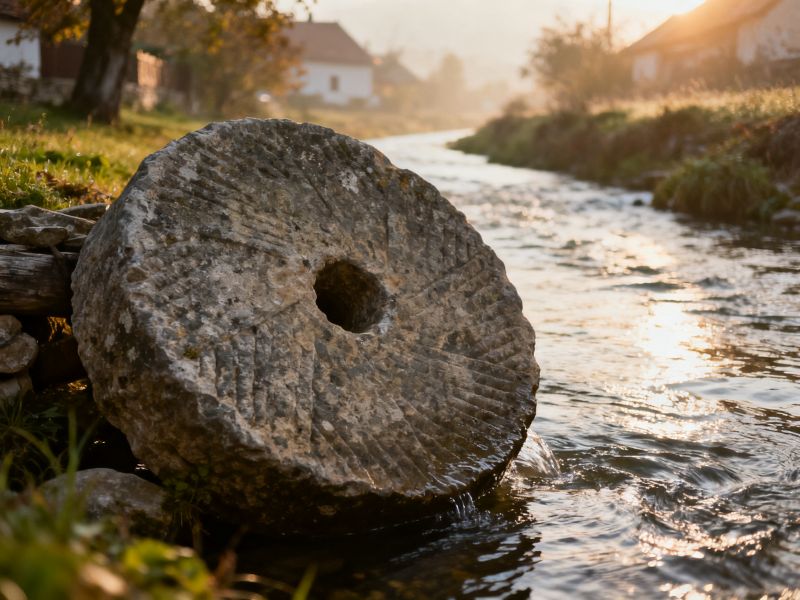
Parents cite its blend of softness and grit. I met a young Andrada in Cluj-Napoca, a software engineer who laughed when I asked about her name. 'People expect me to be either a folk singer or a shepherd's daughter,' she said. 'Then they see my code.' She keeps a small stone on her desk, a gift from her grandfather, who told her it was from the old mill. The name。she says, is a reminder that tradition doesn't have to mean standing still.Outside Romania, Andrada is rare but not unknown. A boutique winery in Mendoza, Argentina, bears the name—founded by a Romanian immigrant in the 1970s. The labels feature a hand-drawn millstone. In Toronto, a small theater company called Andrada Stage produces plays in Romanian and English, bridging two audiences. These aren't grand monuments. They're small。
deliberate acts of preservation. The name survives not through statues but through choices—what people name their daughters, what they put on a wine label, what they whisper to a child holding a stone.I keep thinking about Ion's river metaphor. Names like Andrada don't just endure;they erode and reshape the ground they pass through. They pick up silt。drop it elsewhere, and keep moving. That's not a legacy you can frame. It's a current. And if you listen closely, you can hear it—in a blacksmith's hammer, in a coder's quiet laugh, in the clink of a wine glass half a world away.